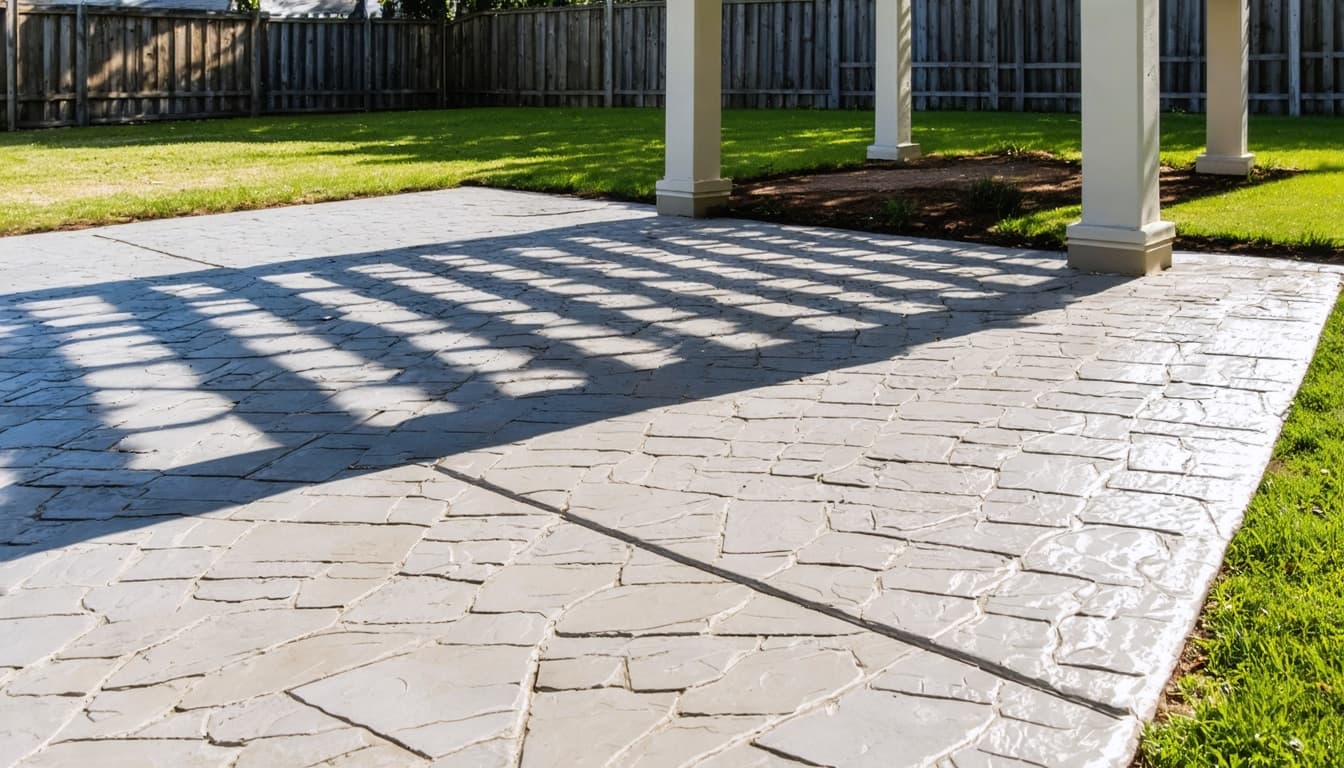
Texas heat doesn't change what a DFW concrete patio costs — $8 to $15 per square foot installed at 2026 rates — but it absolutely changes how it has to be built, because a slab poured wrong in 100° weather is a slab that cracks early.
Here's what the heat actually does to concrete, what a good crew does about it, and why the spec matters more in North Texas than almost anywhere else.
What 100° Weather Does to Fresh Concrete
Concrete doesn't "dry" — it cures, a chemical reaction that needs water and time. Heat accelerates the reaction and evaporates the water it needs:
- Faster set, shorter workable window. In summer heat the crew has less time to place, finish, and stamp before the slab stops cooperating.
- Surface moisture loss. A hot, windy afternoon can dry the surface faster than the interior cures — the classic recipe for surface shrinkage cracks.
- Hot subgrade. Sun-baked ground pulls water out of the mix from below at the same time.
None of this makes summer pours a bad idea — DFW crews pour all summer, every summer. It makes technique the difference: early-morning pours, moisture control during curing, and finishing timed to the weather rather than the clock.
The Real Texas Problem Is Under the Slab
The heat you feel is temporary; the clay under your patio is forever. North Texas clay swells when it rains and shrinks hard in drought — the same summer that stresses fresh concrete also shrinks the soil supporting it. That's why the spec matters:
- 3,500 PSI mix — the correct standard for North Texas clay, and what every pAIsa estimate specifies
- Proper control joints — so the slab cracks where it's designed to, not across the middle
- Correct base prep — a stable, compacted base between the clay and your concrete
A patio poured to generic national specs is a patio that cracks by year three here. Every pAIsa estimate is built for DFW soil, not a national template.
What It Costs — Heat Doesn't Move the Rate
The 2026 DFW rates hold year-round:
| Finish | Price/Sq Ft | Volume Rate (500+ sq ft) |
|---|---|---|
| Broom finish | $8.00 | $7.25 |
| Salt or colored | $10.00 | $9.25 |
| Exposed aggregate / stain | $11.00 | $10.25 |
| Stamped | $15.00 | $14.25 |
The average DFW patio project runs $7,900 based on real PaisaLocal project data. For the full finish-by-finish breakdown, see the concrete cost per square foot guide; if you're eyeing the stone look, the stamped concrete guide covers all 74 patterns. City-level rates and permits: concrete cost in Dallas, TX and Fort Worth.
Should You Wait for Fall to Pour?
Honest answer: you don't have to, but timing has real perks.
Pouring now (summer): completely doable with a crew that respects hot-weather technique — and your patio is ready for fall evenings, which is when DFW backyards actually get used.
Booking now, pouring in fall: milder curing conditions, and you skip the peak-season scheduling crunch. Either way, the price is the same — rates don't change with the season.
What you shouldn't do is hire whoever can pour "this afternoon" in August at a too-good price. Speed plus heat plus a thin crew is how three-year-old patios end up looking ten.
How PaisaLocal Estimates Work
Describe your patio at paisalocal.com and three AI agents price it line by line — concrete at 3,500 PSI, forming, reinforcement, your finish, your city's permits — in about two minutes. A crew lead walks your yard before scheduling (access, grade, sprinklers), and milestone payments (20/30/30/20) mean you never pay for work that hasn't happened.
FAQ
Does summer heat make a concrete patio more expensive in DFW?
No — 2026 rates hold year-round: $8–$15 per square foot installed depending on finish. Heat changes technique, not price.Can you pour concrete in 100-degree Texas weather?
Yes, with hot-weather technique: early-morning pours, moisture control during curing, and finishing timed to conditions. DFW crews do it all summer.Why does concrete crack in Texas?
Usually the clay, not the heat: North Texas clay swells and shrinks between rain and drought. The defense is 3,500 PSI mix, proper control joints, and correct base prep — the spec every pAIsa estimate uses.What PSI should concrete be in Texas heat?
3,500 PSI is the North Texas standard — for clay soil and temperature swings both.Is fall a better time to pour a patio in DFW?
Curing conditions are milder and scheduling is easier, but summer pours done right last just as long. Price is identical either way.How fast can I get an exact price?
About two minutes at paisalocal.com — a full line-item estimate for your dimensions, finish, and city.---
Pricing from 2026 DFW rate tables with real ready-mix supplier costs; project average from PaisaLocal's published DFW dataset across 27 cities (July 2026).